


Meltblown nonwoven fabric is commonly produced from polypropylene fibers. With fiber diameters typically ranging from 1–5 microns, it features a fine microfiber structure with a soft, porous surface.
Due to its complex fiber network, the material provides a high surface area and enhanced capillary action, allowing liquids to be absorbed, transported, and retained effectively. This structure provides good liquid absorption and retention performance.
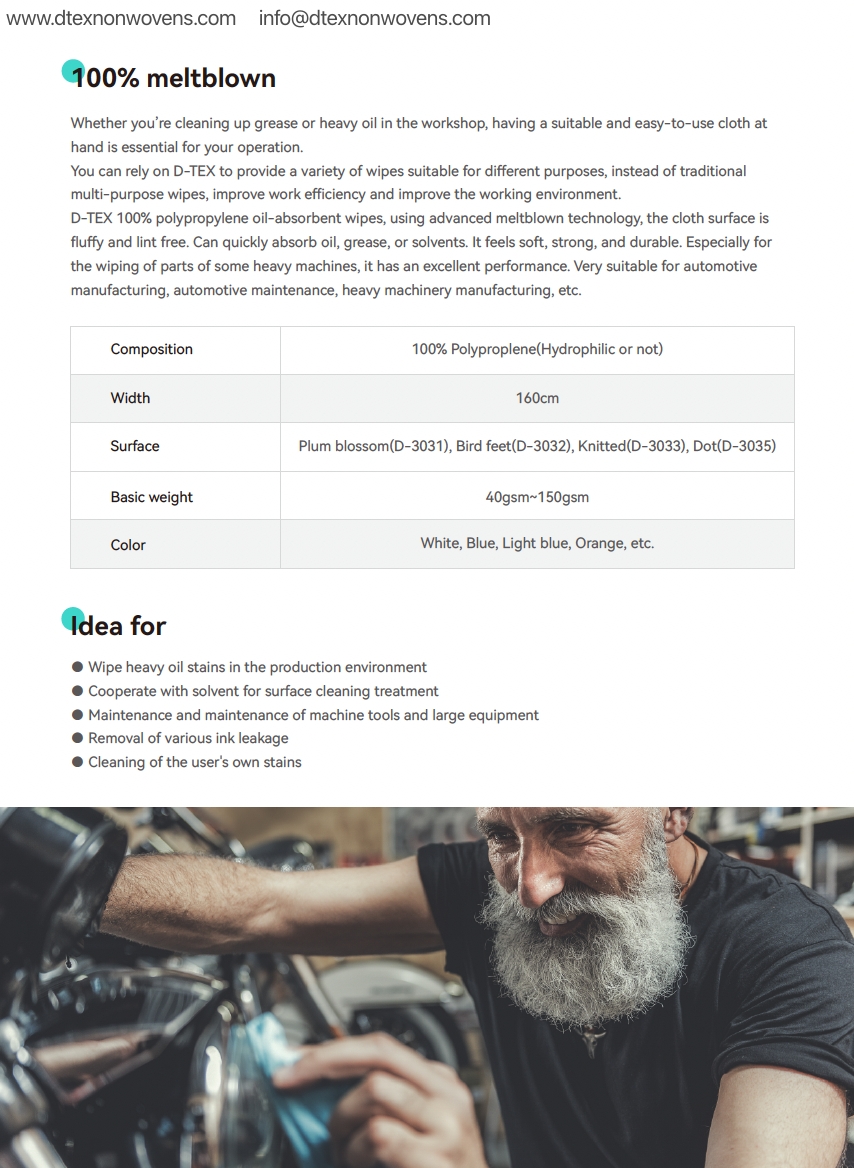
The polypropylene fiber composition also provides good oil absorption capability, making the material suitable for applications such as automotive maintenance, wastewater treatment, ship engine room cleaning, oil storage facilities, gas stations, hotels, household oil cleaning, and filter pad applications.
Technical Data
Composition: 100% Polypropylene
Process: Meltblown process
Basis weight range: 35 gsm–200 gsm
Workable width: 160 cm
Color: White, blue, orange, etc.
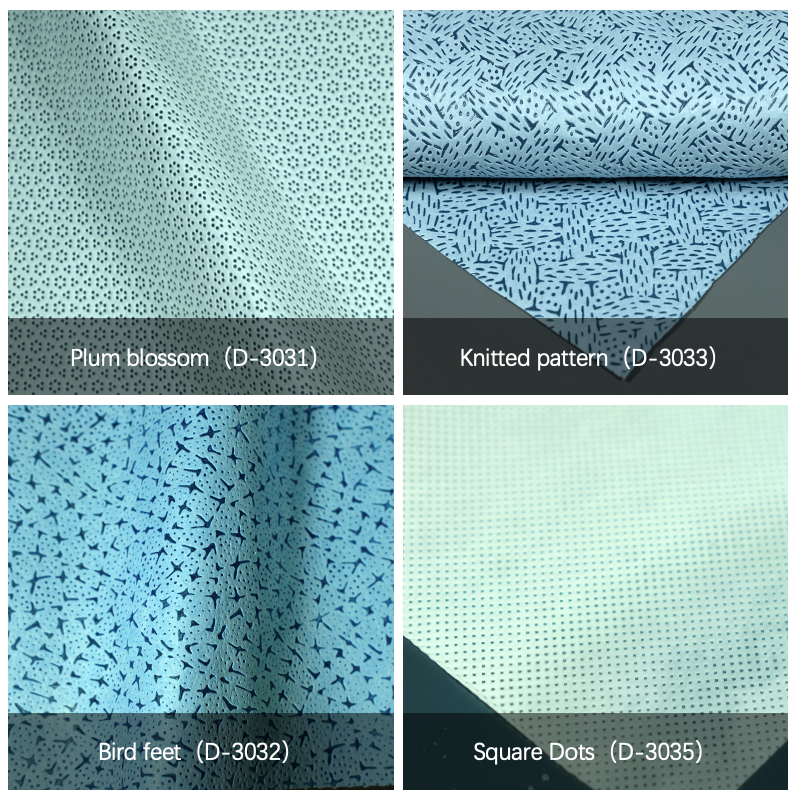
Pattern: Plum blossom pattern, knitted pattern, bird feet pattern, square pattern
Made from high-performance nonwoven materials, this meltblown wiping material provides good wet strength and high oil absorption capability. It is suitable for removing oil stains, water, and various solvents in industrial cleaning applications.
The material can be converted into both roll and sheet formats. When used with solvents, single-sheet dispensing helps improve material usage efficiency.
Applicable Industries:
● Aviation manufacturing cleaning
● Metal processing and metallurgy
● Petrochemical industry cleaning
● Large machinery and equipment manufacturing
● Printing industry cleaning
● Transportation equipment and related industries
● Heavy-duty industrial cleaning applications
Applications:
● Removal of heavy oil stains in industrial production environments
● Surface cleaning and treatment with solvents
● Maintenance and servicing of machine tools and large equipment
● Removal of ink residues and spills
Meltblown Nonwoven Production Process:
Polymer feeding → Melt extrusion → Fiber formation → Fiber cooling → Web formation → Bonding into nonwoven fabric